
Why the Best Way to Learn Vibe Coding Is Replacing Traditional Programming
The best way to learn vibe coding starts with one simple shift: stop memorizing syntax and start describing what you want to build.
Here’s a quick answer to get you started:
- Set up your tools – Install Cursor IDE and connect Claude or GitHub Copilot
- Learn outcome-based prompting – Describe what you want, not how to build it
- Build small projects immediately – A working app in your first week beats theory every time
- Use the 80% rule – Accept the first AI output as a foundation, then iterate with small, specific prompts
- Master debugging by conversation – Paste error messages directly back to the AI and refine
- Deploy early and often – Push to Vercel or Netlify from day one to build real-world instincts
- Graduate to production skills – Add TypeScript, security reviews, and architecture thinking as you progress
Most learners reach proficiency in 16 weeks at 5-10 hours per week. Simple apps can be built in your first 30 minutes.
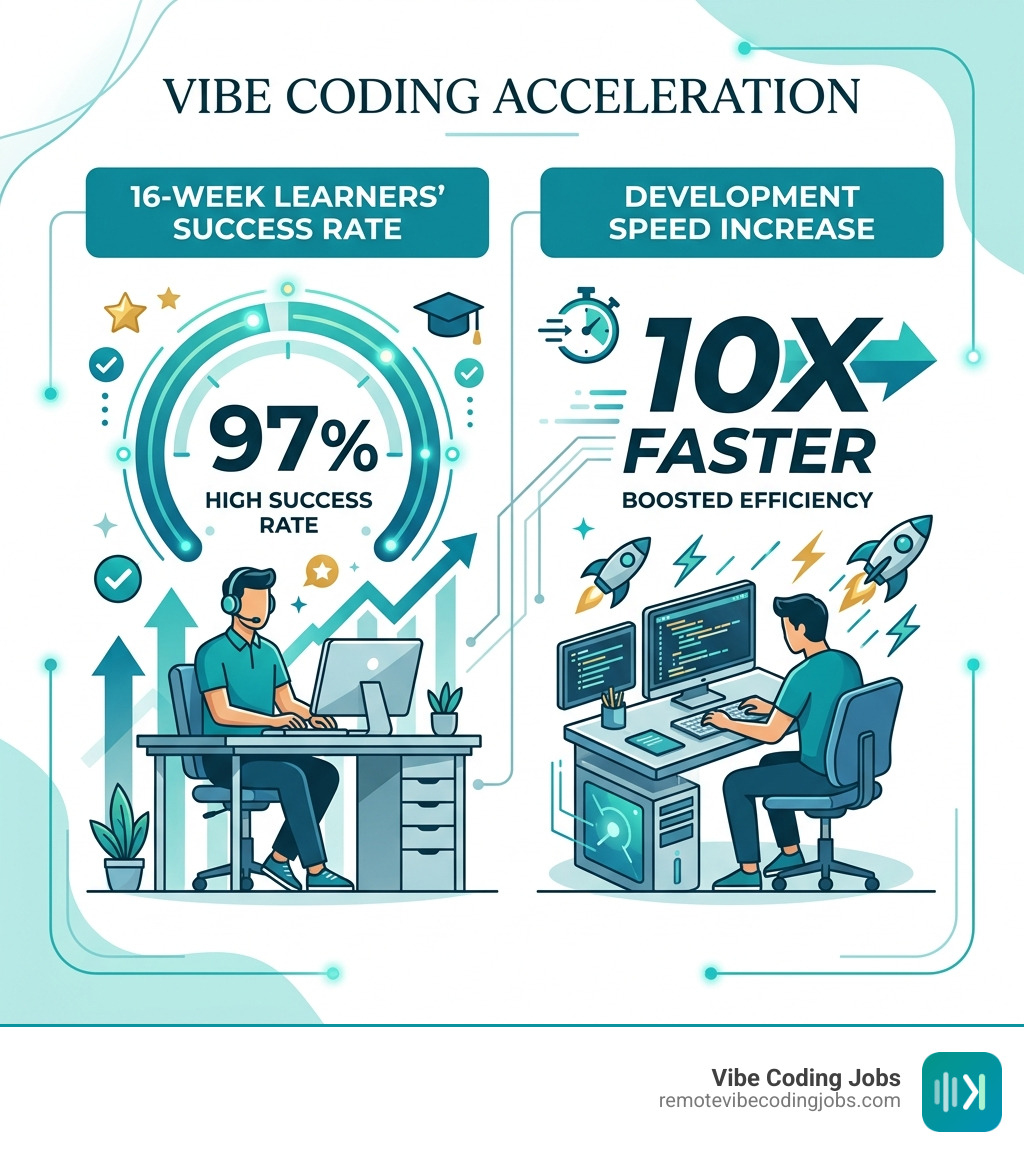
The term “vibe coding” was coined by AI researcher Andrej Karpathy in early 2025, and his original post describing the concept has since crossed 4.5 million views. The idea is simple but powerful: instead of writing every line of code by hand, you describe your intent in plain language and let an AI assistant handle the implementation. The result? Developers are building applications 10x faster than traditional methods allow — and 78% of people doing it successfully have no prior coding background at all.
This isn’t just a Twitter trend. Microsoft, Google, and Replit have all built formal training programs around it. Y Combinator reported that 25% of its 2025 startup batch built 95% of their codebases using AI. The way software gets made is changing fast, and the window to get ahead of that curve is right now.
RVCJ Editorial covers AI-assisted development, vibe coding workflows, and career paths for engineers building with tools like Cursor, Claude, Copilot, and Replit — making us well-placed to guide you toward the best way to learn vibe coding for real-world results. Whether you’re a complete beginner or an experienced developer looking to dramatically increase your output, the roadmap ahead will meet you where you are.
What is Vibe Coding and Why It’s the Future of Software
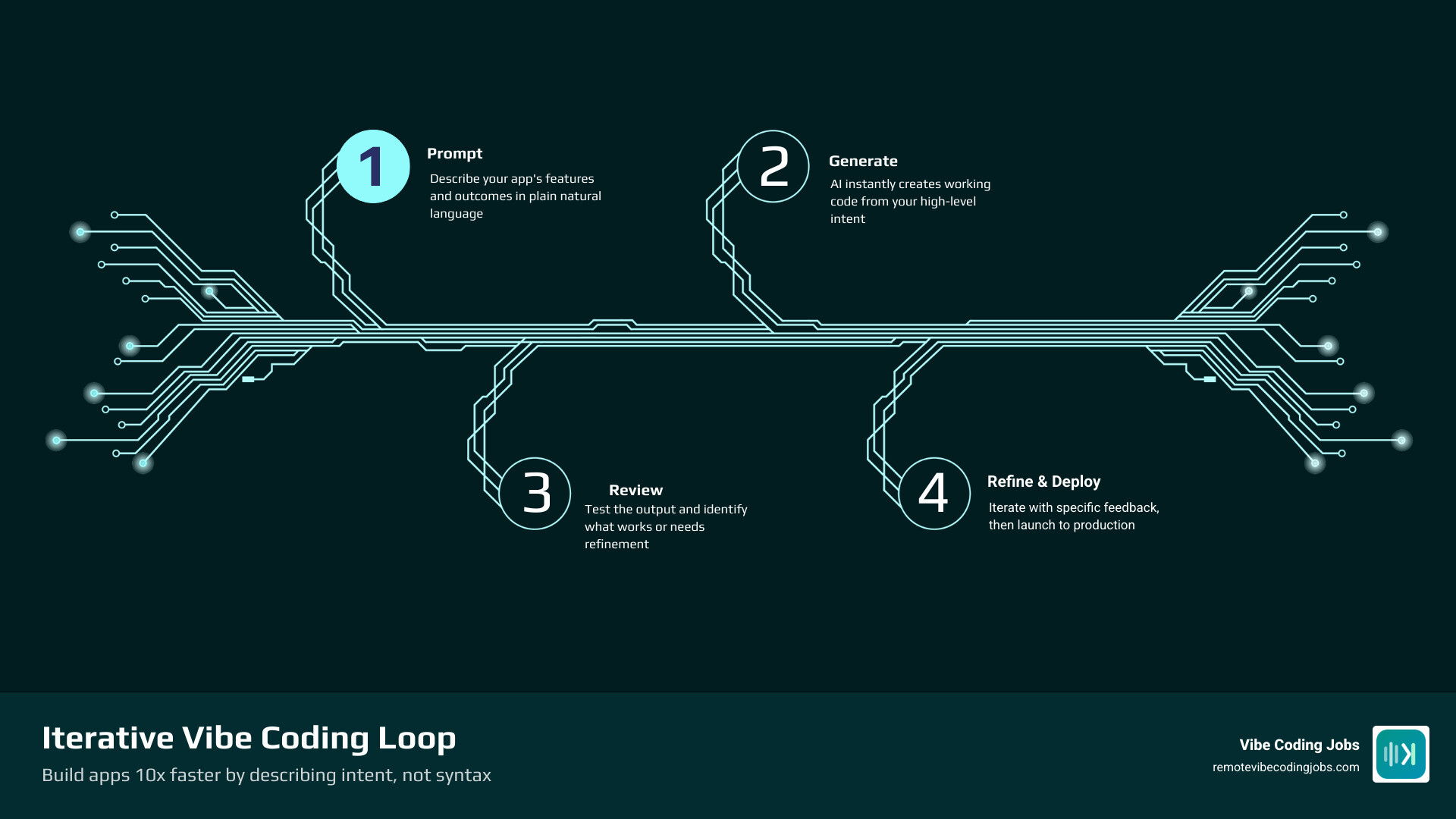
To understand What is Vibe Coding, we have to look at how software development has traditionally worked. For decades, coding was about “how”—how to write a loop, how to manage memory, how to configure a server. Vibe coding flips the script. It is an approach to development where the human provides the “what” (the intent) and the AI provides the “how” (the syntax).
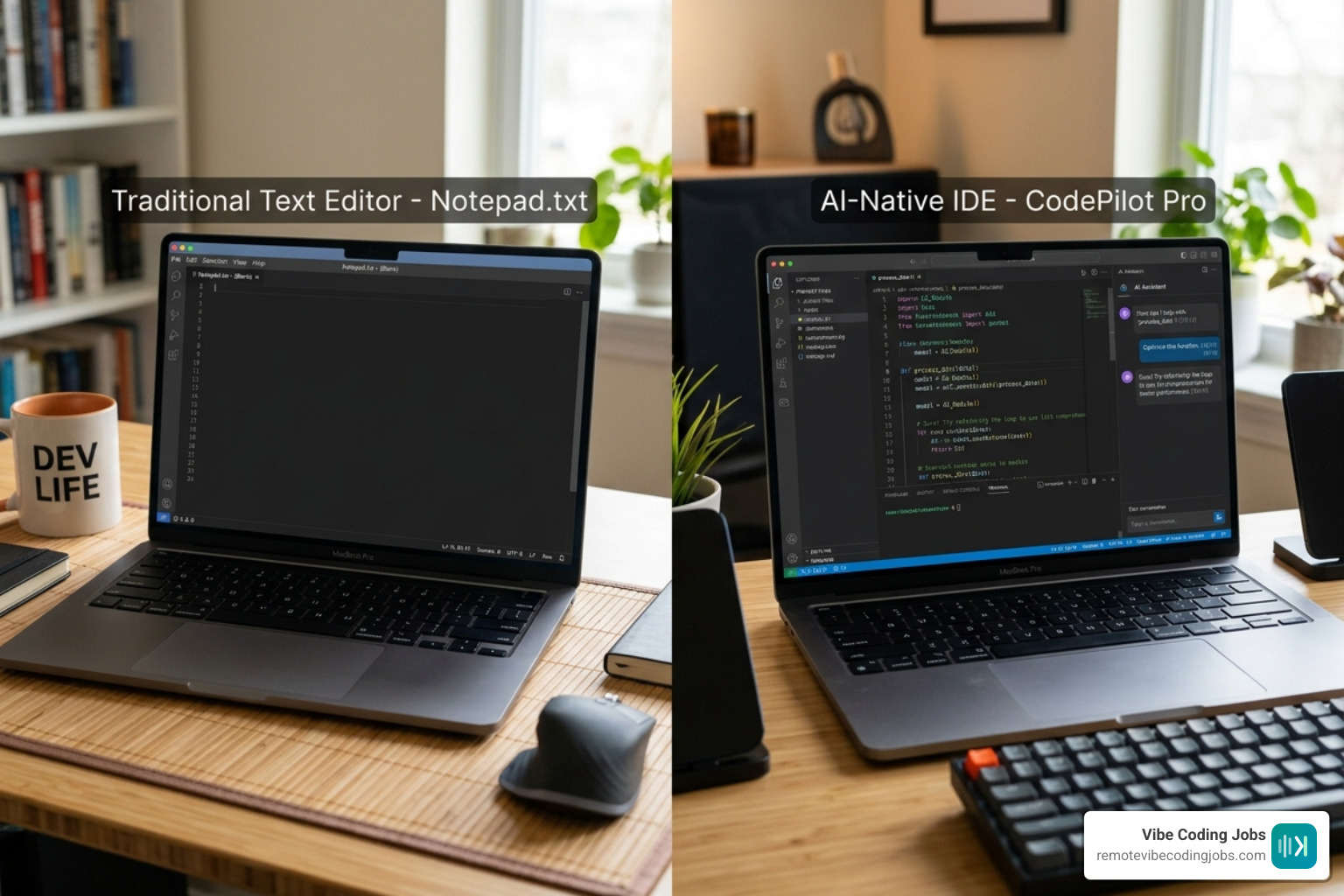
In this new paradigm, we move away from being “syntax typists” and toward being “creative directors.” Instead of staring at a blank text editor, we use AI-native IDEs that understand our project’s context. This shift is so significant that major players have released an Introduction to Vibe Coding – Training – Microsoft Learn module to standardize the practice.
The Shift from Manual Syntax to Creative Direction
Is this a real job? Absolutely. Is Vibe Coding Real Unveiling the Truth Behind the Trend shows that the “vibe” isn’t just a feeling—it’s high-level technical intent. In traditional coding, you might spend hours debugging a semicolon. In vibe coding, you spend that time thinking about user flow, edge cases, and product logic.
We remain “in the loop” as the architect. We aren’t abdicating our roles; we are upgrading them. By focusing on logic over memorization, we can prototype an idea in 30 minutes that used to take three weeks of manual labor.
The Best Way to Learn Vibe Coding: A 16-Week Roadmap
If you want to master this, you need a plan. Based on data from over 30,000 students, there is a clear path to success. In fact, there is a 97% success rate for students who complete a structured 16-week learning roadmap. This journey takes you from “I don’t know what a terminal is” to “I just shipped a full-stack SaaS.”
You can find the details in the How to Learn Vibe Coding: Complete 2025 Learning Guide & Roadmap | Vibe Coding Learn. It’s not just about the code; it’s about How to Get Vibe Coding Job Skills Portfolio Networking so you can turn these skills into a career.
Phase 1: Foundation and the Best Way to Learn Vibe Coding Basics
The first four weeks are about environment and “vibe” literacy. The best way to learn vibe coding basics is to get your hands dirty with a Vibe Coding with Cursor Tutorial Unleash Your AI Coding Potential.
During this phase, we focus on:
- IDE Setup: Installing Cursor and linking it to Claude 3.5 Sonnet.
- Basic Web Literacy: Understanding the “vibe” of HTML and CSS. You don’t need to memorize the tags, but you need to know what a “div” or a “button” looks like.
- The First Win: Building a personal portfolio site. If you can describe your bio and see it live on a URL in 20 minutes, you’ve started the journey.
Phase 2: Building Projects and the Best Way to Learn Vibe Coding Logic
Weeks 5 through 12 shift toward complexity. This is where you learn How to Vibe Code a Full Stack App a Developer s Guide. You’ll start integrating databases (like Supabase or Convex) and managing APIs.
The projects here should be functional:
- Real-time Chat: Learning how WebSockets feel.
- Task Managers: Understanding how to save data and retrieve it.
- AI Wrappers: Connecting your app to OpenAI or Anthropic APIs to build your own mini-AI tools.
Essential Tools and Platforms for the Modern Vibe Coder
You are only as good as your toolkit. In 2026, the ecosystem has matured into three main categories: AI-native IDEs, Browser-based builders, and Agentic CLI tools.
| Tool | Best For | Learning Curve | Key Feature |
|---|---|---|---|
| Cursor | Professional Dev | Medium | Codebase-wide context (@ files) |
| Claude Code | Terminal Power Users | High | Agentic file editing via CLI |
| Replit Agent | Absolute Beginners | Low | Zero-config environment setup |
| Lovable.dev | UI/UX Focused | Low | Visual-to-code generation |
For a deeper dive, check out our list of Must-Have Vibe Coding Tools and the Vibe Coder Toolkit Services.
Choosing the Right AI-Native IDE
The debate usually comes down to Claude Code vs Copilot for Developers in 2026 a Deep Dive. While many started with Vibe Coding Github Copilot, Cursor has become the industry favorite because of its “Composer” mode, which can edit multiple files simultaneously.
The secret sauce is the “Context Window.” Modern models like Claude 3.5 Sonnet have 200k+ token windows, meaning you can feed the AI your entire project documentation, and it won’t “forget” the rules you set in the first folder.
Browser-Based Builders and Rapid Prototyping
Sometimes, you don’t even want to open an IDE. Platforms like Bolt.new allow you to run a full Node.js environment in your browser using WebContainers. This is the best way to learn vibe coding if you want instant gratification. You can follow a Vibe Coding Tutorial – Build your first app in 30 minutes | AI Learning Guy and have a live, shareable link before your coffee gets cold.
Mastering Prompt Engineering and Iterative Refinement
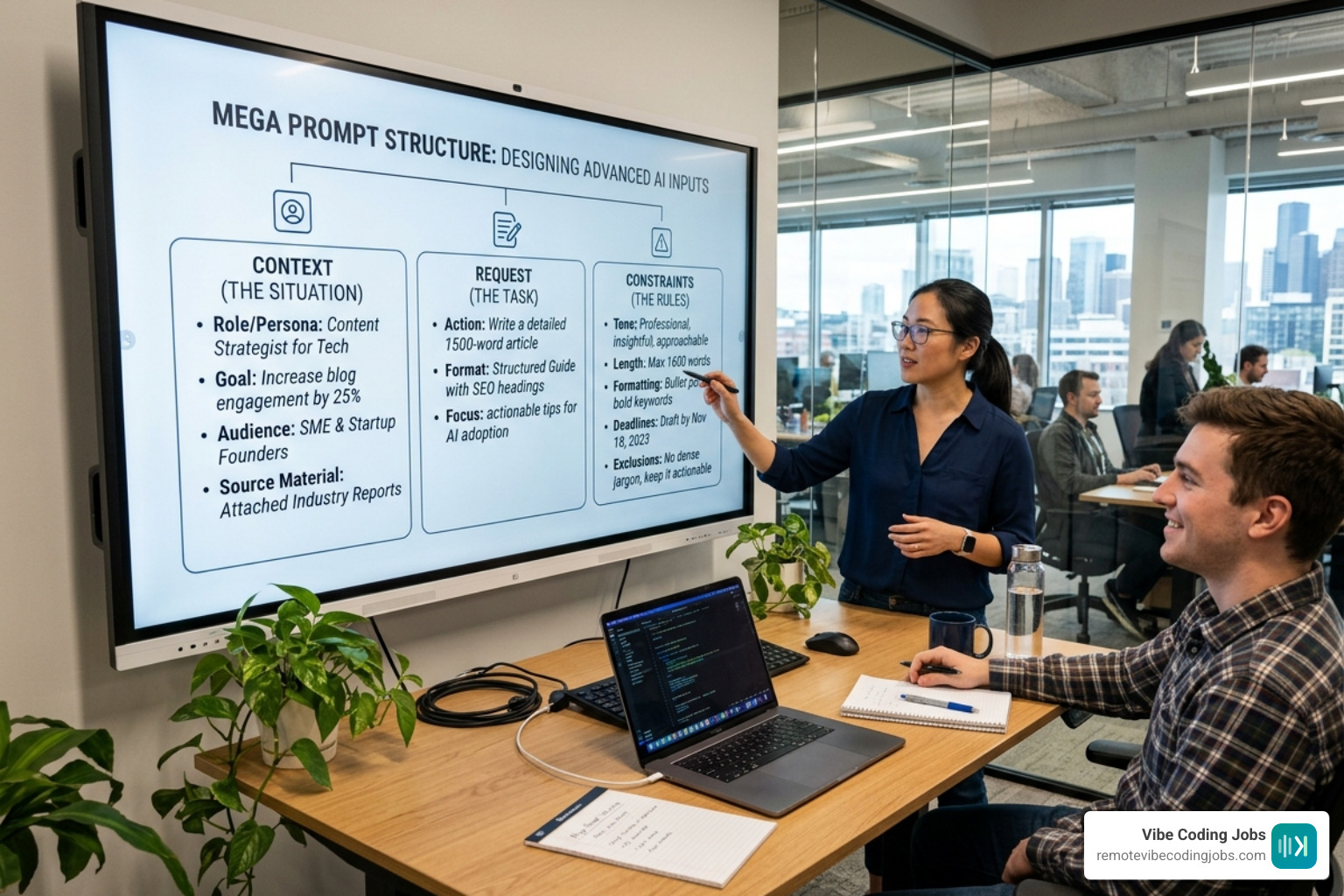
Prompting isn’t just “talking” to a computer; it’s providing a technical specification. The Complete Beginner’s Guide to Vibe Coding an App in 5 Minutes – Microsoft for Developers emphasizes being outcome-driven.
We use the 5W1H Framework:
- What: What is the app? (e.g., A budget tracker)
- Why: Why does it exist? (e.g., To help freelancers track expenses)
- Who: Who is it for? (e.g., Non-technical users)
- Where: Where will it live? (e.g., Mobile-responsive web)
- When: When does X happen? (e.g., When the user clicks “Save”)
- How: How should it look? (e.g., Minimalist, dark mode, Tailwind CSS)
Advanced vibe coders use a .cursorrules file to set global constraints, ensuring the AI never uses outdated libraries or messy patterns.
Debugging and Troubleshooting AI-Generated Code
The “vibe” can sometimes go wrong. AI models can hallucinate or create “Frankenstein codebases” where different parts of the app don’t talk to each other. To fix this, we use the Augmented Debugging Loop:
- Identify the symptom (e.g., “The button doesn’t click”).
- Open Browser DevTools and copy the red error text.
- Paste that error back into the AI.
- Demand a “Root Cause Analysis” before accepting the fix.
Using Top AI Code Completion Tools for VSCode in 2024 can help catch these errors early, but the most robust method is Test-Driven Vibing (TDV). Tell the AI: “Write a test that fails if the login doesn’t work, then write the code to make it pass.”
Transitioning from Prototypes to Production-Ready Applications
Shipping a “vibe” to a few friends is easy. Shipping to 10,000 users requires a different mindset. You need to focus on How to Get Vibe Coding Job Skills Experience like security and scalability.
- TypeScript is Non-Negotiable: It acts as a safety net, catching AI logic errors before they crash your app.
- Security Audits: AI is notorious for leaving API keys exposed or creating SQL injection risks. 45% of AI-generated code contains security flaws. Always ask the AI: “Are there any security vulnerabilities in this snippet?”
- Vibe Deploying: Use Vercel or Netlify for one-click production launches.
Building a Portfolio and Landing a Career in Vibe Coding
To get hired, you need to show you aren’t just a “prompt typist.” Companies want “Product Thinkers.” Your portfolio should demonstrate that you understand the Cursor Copilot Developer Jobs Remote Market Career Path.
When you interview, be ready for “hard questions”:
- “How does this handle 10,000 concurrent users?”
- “What happens if the third-party API fails?”
- “Can you explain the logic behind this AI-generated function?”
Mastering How to Land Remote Vibe Coding Job Skills means being able to hot-fix your app at 3 AM without needing the AI to hold your hand.
Frequently Asked Questions about Vibe Coding
Is vibe coding real programming?
Yes. It is a higher-level form of programming. Just as C++ replaced assembly and Python replaced C++, vibe coding is the next layer of abstraction. You are still building logic and systems; you’re just using a more efficient interface.
Do I need to learn traditional coding first?
No, but you should learn “coding literacy.” You don’t need to memorize how to write a for loop from scratch, but you should be able to read one and understand what it’s doing. 78% of successful vibe coders started with zero experience.
Can I get a job as a vibe coder in 2026?
Absolutely. Companies are looking for “AI-Assisted Developers” who can ship products 10x faster than traditional engineers. The role is shifting from “coder” to “builder.”
Conclusion
The best way to learn vibe coding isn’t by reading a textbook; it’s by building. The barrier to entry has never been lower, but the ceiling for what you can create has never been higher. Whether you are looking for How to Get Vibe Coding Job Remote AI opportunities or you want to launch your own startup, the tools are ready for you.
At RemoteVibeCodingJobs, we see the shift every day. Companies are no longer just hiring for “Java” or “Python”—they are hiring for the ability to leverage AI to solve business problems at lightning speed.
Stop learning syntax. Start building your vision. The “vibes” are waiting.