
The Best Vibe Coding Training Programs in 2026
Vibe coding training is booming — and if you want to build software with AI tools instead of writing every line by hand, here are the top options to get started fast:
Top vibe coding training programs at a glance:
| Program | Best For | Duration | Cost |
|---|---|---|---|
| Vibe Coding Essentials Specialization (Coursera) | Beginners, no experience needed | ~4 weeks at 10 hrs/week | Free to audit |
| Introduction to Vibe Coding (Microsoft Learn) | Developers using GitHub Copilot | 1 hr 20 min | Free |
| Learn Vibe Coding Learning Path (LinkedIn Learning) | Business users and developers | ~6 hours total | Subscription |
| GitHub Copilot Beginner to Pro (Udemy) | Developers leveling up | Self-paced | $10–$50 |
| VibeCoding 101 (Campus) | Non-technical professionals | 8 weeks | $1,500 |
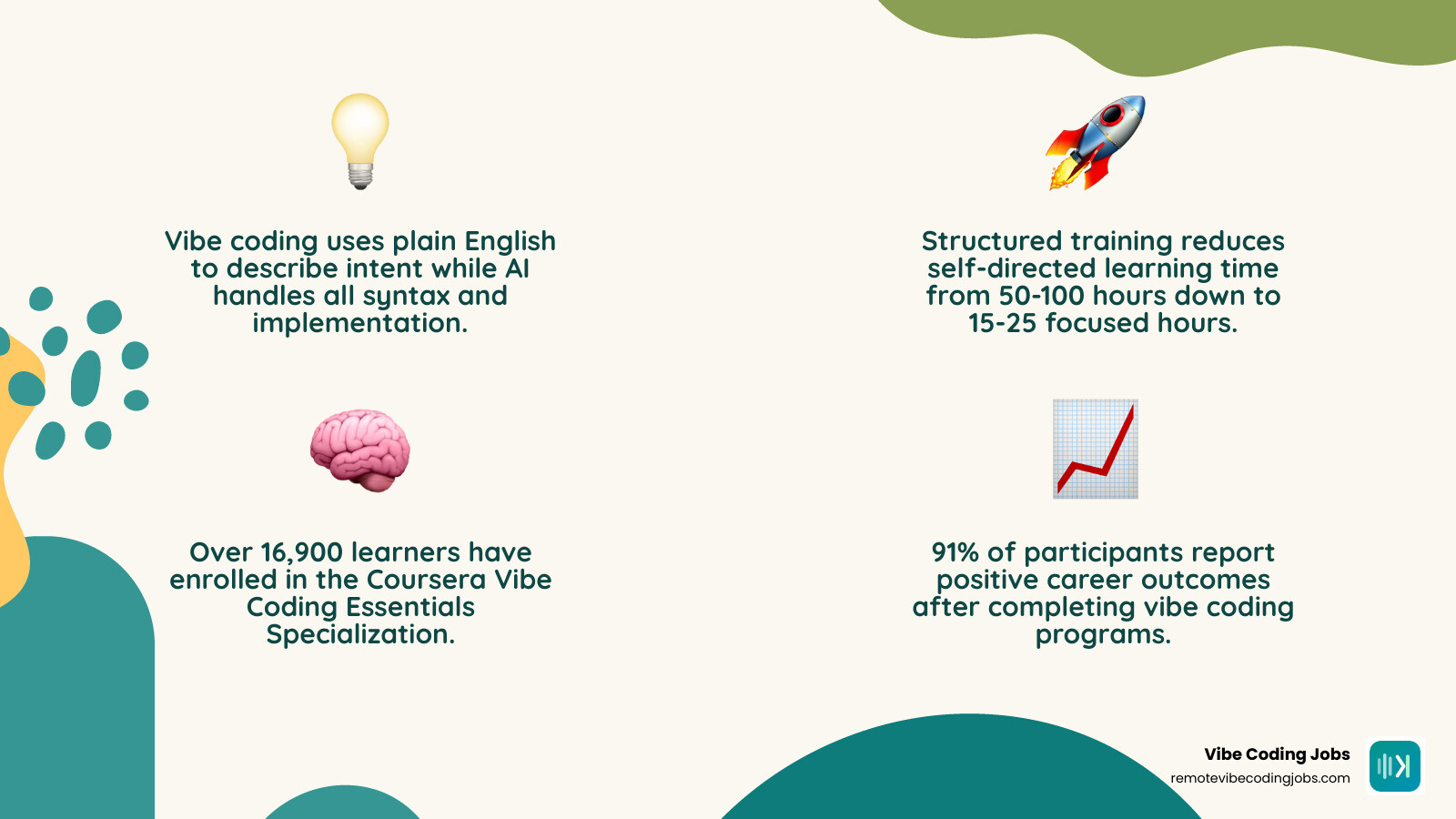
The term “vibe coding” was coined by AI researcher Andrej Karpathy in early 2025. The core idea: instead of writing code line by line, you describe what you want in plain English and let AI handle the implementation. You focus on architecture and product. The AI handles the syntax.
This shift is real and accelerating. Over 16,900 learners have already enrolled in Coursera’s Vibe Coding Essentials Specialization alone, with 91% reporting a positive career outcome. And structured courses are cutting what used to take 50–100 hours of self-directed trial and error down to 15–25 hours of focused learning.
Whether you’re a developer looking to move 5–10x faster, or a non-technical professional trying to ship your first app, there’s a training path built for you right now.
We’re the RVCJ Editorial team at Remote Vibe Coding Jobs — we cover AI-assisted development, remote hiring trends, and practical career guidance for developers building with tools like Cursor, Claude, Copilot, and Replit, including hands-on coverage of the best vibe coding training resources available today. Read on for our full breakdown of every major program, what they teach, and which one fits where you are right now.
What is Vibe Coding and Why It’s Essential in 2026
As we navigate through May 2026, the software landscape has fundamentally shifted. We no longer spend our mornings hunting for missing semicolons. Instead, we spend them architecting systems and defining “vibes.”
Vibe coding is an intent-based approach to software development. It relies on AI agents—like Cursor, Claude Code, and GitHub Copilot—to translate natural language descriptions into functional, production-ready code. Unlike traditional programming, which requires a deep mastery of syntax and language-specific quirks, vibe coding prioritizes system thinking and architectural oversight.
When you engage in vibe coding training, you aren’t just learning to prompt; you’re learning to become a “Software Orchestrator.” As Andrej Karpathy famously suggested, the “hottest new programming language is English.” This doesn’t mean the underlying code doesn’t matter, but it does mean the human’s role has moved up the stack.
According to the Introduction to Vibe Coding – Training | Microsoft Learn module, this approach allows for rapid prototyping where requirements and wireframes are generated iteratively. You “vibe” with the AI until the output matches your mental model.
Traditional Coding vs. Vibe Coding: A 2026 Comparison
To understand why Vibe Coding vs Traditional Development is the biggest debate in tech right now, look at how the workflow has changed:
| Feature | Traditional Development | Vibe Coding (2026) |
|---|---|---|
| Primary Tool | Manual IDE (VS Code, IntelliJ) | Agentic IDEs (Cursor, Windsurf) |
| Input Method | Manual Syntax (Java, Python, C++) | Natural Language & System Prompts |
| Speed | 1x (Baseline) | 5x–10x Productivity Multiplier |
| Human Focus | Implementation & Debugging | Architecture, UX, & Product Logic |
| Error Handling | Manual Stack Trace Analysis | Iterative “Vibe Debugging” Loops |
| Entry Barrier | Years of Technical Training | Weeks of Strategic Training |
Top-Rated vibe coding training Programs for Every Level
The market for vibe coding training has matured rapidly. By May 2026, structured learning paths have replaced the “guess and check” method of the early 2020s. If you are looking to get certified or simply gain the skills to land a high-paying remote role, these are the heavy hitters.
Coursera: Vibe Coding Essentials Specialization
This is currently the gold standard for comprehensive learning. With 16,910 students already enrolled, it offers a five-course series that takes you from zero to building full-stack applications. The data is impressive: 91% of learners achieved a positive career outcome, such as a promotion or a new job.
The Vibe Coding Essentials – Build Apps with AI Specialization – Coursera covers everything from Cursor AI to the Model Context Protocol (MCP), ensuring you can connect AI models to real-world data. It’s a great starting point if you’re looking into How to Get Vibe Coding Job Training Courses Mentorship.
Microsoft Learn: Introduction to Vibe Coding
For those already in the GitHub ecosystem, Microsoft’s 1-hour and 20-minute module is a must. It focuses specifically on using the GitHub Copilot Agent to generate product requirements and wireframes. It’s highly technical and perfect for developers who want to integrate vibe coding into their existing professional workflow without committing to a multi-month course.
LinkedIn Learning: Build Apps with AI-Powered Coding
This path is designed for entrepreneurs and business professionals. With over 15,770 viewers for its fundamental course, it teaches the “Spec-Blueprint-Roadmap” framework. This framework is essential for turning vague ideas into working apps with minimal bugs. It emphasizes that while the AI writes the code, the human provides the “vibe” or the strategic direction.
Beginner-Friendly vibe coding training for Non-Coders
One of the most exciting aspects of the 2026 tech world is that you don’t need a CS degree to build software. We’ve seen marketing managers, HR professionals, and students ship functional apps in record time.
- Campus.edu (VibeCoding 101): This 8-week program is specifically for non-technical professionals. You meet once a week and work toward shipping four working apps. It’s professional, encouraging, and focused on building a portfolio.
- Replit 101 with Andrew Ng: Available via LinkedIn and Replit, this short course is a “vibe” in itself. It teaches you how to use Replit’s cloud environment to partition problems into manageable modules. Andrew Ng’s philosophy is simple: don’t ask the AI to do everything at once. Build one module, test it, and move on.
- KnowledgeHut: Their “Vibe Coding No-code for Everyone” course is a 6-week certification that focuses on intent-based development. It’s popular among Product Managers who need to build prototypes in 45 minutes rather than weeks.
If you’re just starting, check out Vibe Coding with AI: A Beginner’s Practical Guide 2026 to get your bearings before enrolling in a paid bootcamp.
Advanced Curriculum for Professional Developers
For the seasoned devs among us, vibe coding training isn’t about learning to code—it’s about learning to lead a fleet of AI agents.
- Agentic Workflows: Modern courses now teach how to set up “Agentic” development. This involves using tools like Claude Code and Claude Sonnet 4.5, which can run for 30 hours straight and generate over 11,000 lines of code in a single autonomous session.
- Model Context Protocol (MCP): Advanced training on Coursera and Udemy now includes MCP, which allows you to connect your AI to external tools, databases, and APIs. This is the difference between a “toy” app and a production-grade SaaS.
- GitHub Copilot Mastery: With over 95,000 students on Udemy, the “Beginner to Pro” course for Copilot has become a staple. It teaches how to use “slash commands” and custom instructions to make the AI act like a Senior Architect rather than just a autocomplete tool.
To see what tools the pros are using, dive into our guide on Vibe Coder Tools Copilot Cursor.
Essential Skills and Tools Covered in Modern Courses
When you sign up for vibe coding training, you’re not just learning one tool. You’re learning a toolkit. The most successful “vibe coders” in 2026 use a combination of 2–3 tools to get the job done.
The Core Tech Stack
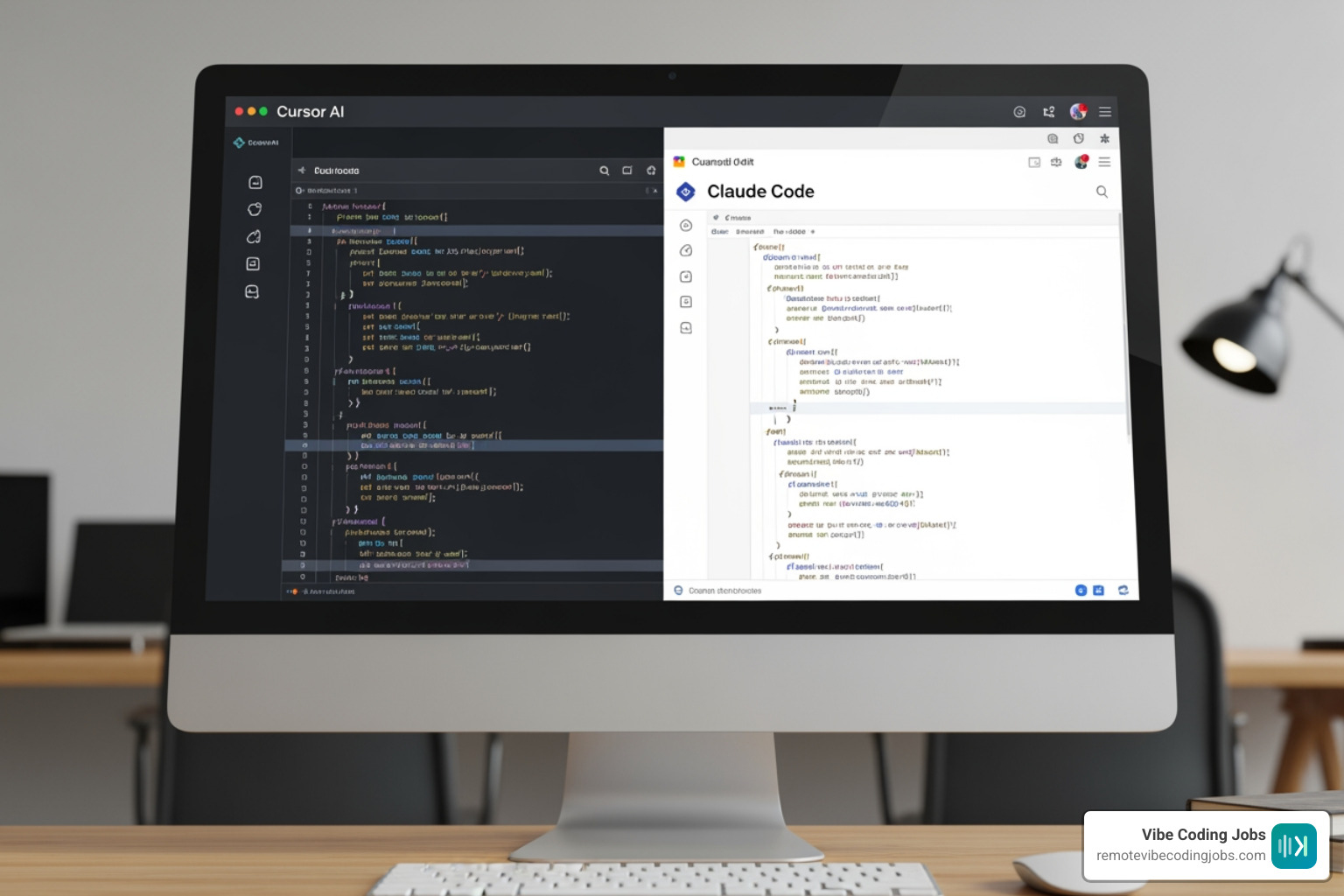
- Cursor AI: The current favorite IDE for vibe coders. It’s a fork of VS Code that has AI baked into its core.
- Claude Code / Sonnet 4.5: Known for its long-form reasoning and ability to handle complex refactoring tasks. In recent tests, Claude Sonnet 4.5 worked for 30 hours straight, dwarfing the 7-hour limit of previous models.
- Bolt.new & Lovable: These are “vibe deploying” platforms. They allow you to go from a prompt to a live, hosted URL in seconds.
- Windsurf: A newer entry in 2026 that focuses on “flow” and deep context awareness, making it excellent for large legacy codebases.
Critical Skills to Master
- Prompt Engineering: Not just “write me a website,” but structured prompting using the “Spec-Blueprint-Roadmap” framework.
- System Design: Understanding how a frontend, backend, and database interact, even if you aren’t writing the SQL queries yourself.
- Context Management: Learning how to keep your project “tidy” so the AI doesn’t get confused by old code or irrelevant files.
- Deployment & DevOps: Modern courses cover how to launch to Netlify, Vercel, or AWS with a single click.
For a deeper look at the services you’ll need, check out the Vibe Coder Toolkit Services.
Mastering the vibe coding training Debugging Loop
The biggest misconception about vibe coding is that it’s “one and done.” In reality, the most important part of vibe coding training is learning the Vibe Debugging Loop.
AI makes mistakes. It proposes “if-else” logic when it should use a dynamic approach. It creates bloated projects. To counter this, experts recommend a systematic process:
- Iterative Prompting: Give the agent one task at a time.
- Human Oversight: Review the architectural decisions. Don’t just blindly click “Accept All.”
- Unit Testing: Use the AI to generate tests (like pytest) for every module you build.
- Fresh Sessions: Start a fresh chat session for each new feature to avoid “context drift.”
By following these best practices, you ensure your Vibe Coding Portfolio Projects are clean, scalable, and professional.
Career Outcomes and Salary Potential for AI-Native Builders
The ROI on vibe coding training is currently among the highest in the tech industry. Because vibe coders can do the work of 3–4 traditional developers, companies are willing to pay a premium for this efficiency.

Salary Expectations in 2026
Based on our latest data at Remote Vibe Coding Jobs, the compensation for AI-fluent professionals is staggering:
- Junior Vibe Coder (1-2 years exp): $90,000 – $130,000
- Mid-Level AI Developer: $130,000 – $180,000
- Senior AI-First Architect: $250,000 – $400,000+
- Freelance Rates: $75 – $300 per hour depending on niche expertise.
Companies like Orchard and SSOE are actively seeking “Product Engineers” and “Creative Technologists” who can vibe-code prototypes to accelerate growth experiments. These roles often value a strong portfolio of shipped AI apps over a traditional CS degree.
To plan your career path, read our Vibe Coding Remote Jobs Career Path Outlook Tips and check the current Vibe Coding Salary Range Average Entry Senior to ensure you’re being paid what you’re worth.
Frequently Asked Questions about Vibe Coding
Do I need a computer science degree to start vibe coding?
No. While a degree helps with deep theoretical concepts, many vibe coding roles in 2026 prioritize practical “build” skills. A robust portfolio of working applications built with AI tools is often more persuasive than a diploma. However, having a basic understanding of HTML, CSS, and JavaScript will help you debug the AI’s output more effectively.
How long does it take to complete a vibe coding certification?
It varies by program. Short modules like Microsoft Learn take under 2 hours. Comprehensive specializations like the one on Coursera take about 4–8 weeks if you dedicate 10 hours a week. Intensive bootcamps usually run for 6–8 weeks. Most developers report a 2x–5x productivity gain within their first month of structured training.
Which AI tools are most important to learn first?
We recommend starting with Cursor and Claude (Sonnet 4.5). Cursor provides the best “vibe” for an IDE, while Claude offers the most sophisticated reasoning for complex coding tasks. Once you’re comfortable there, explore Replit Agent for quick prototyping and GitHub Copilot for enterprise-level collaboration.
Conclusion
The era of manual boilerplate is over. In 2026, the most successful developers aren’t the ones who type the fastest; they’re the ones who “vibe” the best. By investing in vibe coding training, you are future-proofing your career and joining a new class of super-productive AI-native builders.
At Remote Vibe Coding Jobs, we see the demand for these skills every single day. From startups to Fortune 500s, companies are desperate for talent that can leverage agentic workflows to ship products in hours instead of weeks.
Ready to make the jump? Start by building your skills, then head over to our Vibe Coding Remote Job Ultimate Guide to find your next role in an async-first, AI-driven company. If you’re still wondering “is this for me?”, our deep dive on What is Vibe Coding? will give you all the clarity you need.
Stay vibey, keep shipping, and let the AI handle the boilerplate. We’ll see you in the IDE!