Going Remote with Sitecore: Where to Find the Best Work-from-Home Developer Gigs
The Landscape of Remote Sitecore Developer Jobs in 2026
The enterprise content management landscape has undergone a massive transformation. Historically, enterprise software development of this scale required teams to sit together in physical offices, huddled around local development servers. Today, the modern .NET ecosystem and cloud-first architectures have made remote work the standard for enterprise CMS delivery.
Current Market Demand for Remote Sitecore Developer Jobs
The demand for talented developers who can navigate the complex Sitecore ecosystem remains incredibly high. According to active job market data from June 2026, there are currently hundreds of active Sitecore jobs listed in the United States alone, with a significant portion explicitly offering fully remote work arrangements.
This demand is driven by a persistent talent shortage of developers who understand both legacy .NET MVC setups and modern SaaS-based headless implementations. Many enterprises are currently in the middle of massive multi-year migration projects, moving their digital properties off older on-premise installations and onto the cloud. To understand how these market dynamics fit into the broader tech industry, take a look at our Remote Developer Salary Guide 2026.
Salary Expectations and Compensation Structures
When it comes to compensation, remote Sitecore roles are highly lucrative due to the specialized nature of the platform.
- Mid-Level Developers: Typically command a salary range between $80,000 and $100,000 per year, though some remote contract roles offer equivalent hourly rates that can push annual earnings higher. For example, contract roles with agencies often range from $60,000 to $120,000 depending on the exact project scope.
- Senior Developers & Architects: For seasoned professionals, compensation rises dramatically. Senior application architect positions frequently list an annual salary range of $149,000 to $203,000, plus eligibility for annual bonuses and Restricted Stock Units (RSUs).
These high-end packages reflect the heavy responsibility of designing scalable architecture, managing security pipelines, and leading complex integrations. To see how you can position yourself to climb from mid-level earnings to these top-tier architect salaries, check out our Remote Developer Career Path: Junior to Senior Guide 2026.
Essential Skills and Technologies for Modern Sitecore Roles
To land high-paying remote sitecore developer jobs, you need a blend of traditional .NET backend expertise and modern frontend capabilities. The platform is no longer just a backend .NET framework; it is now a fully decoupled, headless digital experience platform (DXP).
In-Demand Sitecore Technologies: XM Cloud, SXA, and JSS
Modern remote roles heavily favor developers who have experience with Sitecore’s SaaS offering, XM Cloud, along with headless architectures. For implementation details and platform-specific guidance, the official Sitecore XM Cloud developer documentation is a useful reference for understanding current development patterns.
| Feature / capability | Sitecore Experience Platform (XP) | Sitecore XM Cloud (SaaS) |
|---|---|---|
| Hosting Model | On-Premise / PaaS (Azure Web Apps) | Fully Managed SaaS (Cloud-Native) |
| Architecture | Coupled or Headless (via JSS) | Native Headless & Decoupled |
| Frontend Frameworks | ASP.NET MVC, Razor Views | Next.js, React, Vue.js |
| API Layer | Layout Service, Controller Renderings | GraphQL, Experience Edge |
| Upgrades | Manual, complex, and costly | Automatic, managed by Sitecore |
| Search Engine | Solr / Azure Search | Sitecore Search / Coveo |
Employers looking for remote developers frequently require:
- Sitecore Experience Accelerator (SXA): Used to speed up production by providing reusable layout components and styling.
- Sitecore JavaScript Services (JSS) & GraphQL: Essential for querying content and feeding it to decoupled frontend applications.
- Modern Frontend Frameworks: Strong experience with React and Next.js has become a massive differentiator for Sitecore developers. If you want to sharpen your frontend skills to match this demand, explore our guides on Remote React Developer Jobs 2026: Trends & Opportunities and Remote TypeScript Developer Jobs: Guide to Landing Your Next Role.
Certifications and MVP Status for Remote Sitecore Developer Jobs
Because Sitecore is a highly specialized enterprise tool, formal certifications carry immense weight during the hiring process.
- Sitecore XM Cloud Developer Certification: This is the most sought-after credential in 2026, proving you understand SaaS development, components, and cloud migrations.
- Sitecore MVP (Most Valuable Professional) Status: Earning an MVP title in the technology, strategy, or ambassador categories instantly places you at the top of any recruiter’s pile. It shows active community engagement, deep technical knowledge, and thought leadership.
For remote-first roles, certifications act as a trust signal. When hiring managers cannot meet you in person, seeing a verified Sitecore certification or MVP badge on your resume provides immediate peace of mind that you can handle complex tasks with minimal hand-holding.
Where to Find and Apply for Remote Sitecore Gigs

Finding the right remote Sitecore role requires looking in the right places. Because these are highly specialized enterprise jobs, general job boards can sometimes be overwhelming or filled with outdated postings.
Finding Sitecore Roles on Remote-First Platforms
To find high-quality remote positions, you should leverage specialized platforms that understand modern development workflows:
- Niche Remote Boards: Platforms like RemoteVibeCodingJobs specialize in aggregating remote “vibe coding” (AI-assisted development) jobs at forward-thinking, async-first companies. These listings are curated daily and filtered by tech stack, allowing you to find modern headless Sitecore roles that support tools like Cursor and Claude.
- Social and Professional Networks: Keep an eye on professional networks like LinkedIn, where many active remote positions are posted directly by corporate recruiters and hiring managers looking for specialized .NET and CMS talent.
Landing Contract vs. Full-Time Remote Roles
The remote Sitecore market is healthy for both permanent employees and independent contractors:
- Contract Roles: Many organizations need immediate help with specific migration projects, such as modernizing high-profile, public-facing insurance websites or migrating legacy setups to the cloud. These contract roles are excellent for developers who enjoy project-based work, high hourly rates, and clear boundaries.
- Full-Time Positions: If you prefer stability, complete benefits, and long-term product ownership, full-time remote roles are abundant. Many companies offer competitive salaries (often ranging from $90,000 to $95,000+ for mid-level roles) and a dedicated focus on single-project lifecycles.
- International Opportunities: The remote Sitecore market is truly global, with numerous opportunities for professional services and CMS development across Europe, North America, and beyond, allowing developers to work with international clients from the comfort of their homes.
Best Practices for Working in Distributed Sitecore Teams
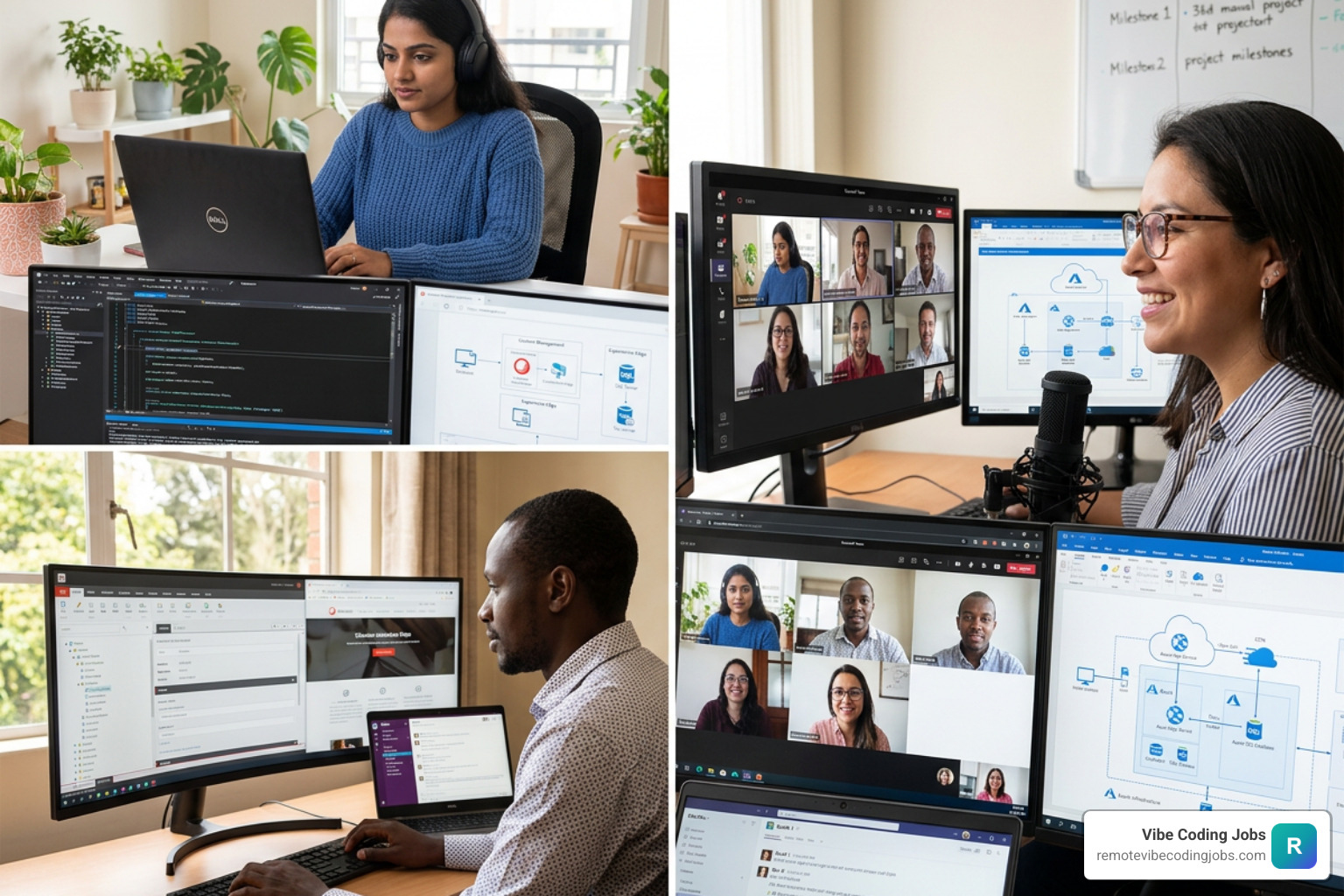
Working remotely as a Sitecore developer requires more than just writing clean C# or Next.js code. Because Sitecore projects involve massive content trees, complex marketing configurations, and multiple stakeholders (content authors, marketers, QA, and client teams), communication is critical.
- Adopt Helix Architecture Principles: Always follow Sitecore Helix guidelines for modular design. This ensures that even when multiple remote developers are working on different features simultaneously, the codebase remains clean, predictable, and free of merge conflicts.
- Master Containerization (Docker): Modern remote Sitecore development relies heavily on Docker. Standardized containers ensure that the “it works on my machine” excuse is a thing of the past, allowing remote teams to spin up identical local environments instantly.
- Embrace Async-First Communication: In a distributed team, constant real-time meetings can kill productivity. Rely on tools like Slack, Jira, and thorough documentation to keep your teammates updated without interrupting their deep-work flow.
- Leverage Modern AI-Assisted Workflows: The rise of “vibe coding” means developers are using AI tools like Cursor, GitHub Copilot, and Claude to write boilerplate code, generate unit tests, and debug pipelines faster than ever. To see how these tools are shaping the future of remote work, read our piece on Remote Developer Jobs: AI Tools, Roles & Careers and learn how to future-proof your career with our guide on Remote Developer Skills in Demand 2026: Future-Proof Your Career.
Frequently Asked Questions about Remote Sitecore Developer Jobs
What is the average salary for a remote Sitecore developer in 2026?
The typical salary range for a mid-level remote Sitecore developer is between $80,000 and $100,000 per year. However, compensation scales heavily with seniority and specific architectural skills. Senior engineers and application architects frequently secure roles paying between $149,000 and $203,000 per year, often accompanied by performance bonuses, health benefits, and equity.
Do I need a Sitecore certification to get a remote job?
While some companies accept equivalent hands-on experience, having an active Sitecore XM Cloud Developer Certification or a legacy XM/XP certification dramatically increases your hiring chances. For fully remote roles, certifications act as an independent verification of your skills, making employers much more comfortable hiring you without a lengthy, practical live-coding test. If you want to bypass traditional whiteboard exams entirely, read our guide on Remote Coding Jobs No LeetCode: Portfolio Focus.
How has XM Cloud changed remote Sitecore development?
XM Cloud has shifted Sitecore from a heavy, server-side .NET framework to a modern, SaaS-based headless CMS. This means developers no longer spend days configuring IIS, SQL Server, and Solr locally. Instead, they build decoupled frontends using Next.js and React, querying the cloud-hosted Sitecore Experience Edge via GraphQL. This makes remote collaboration much easier, as frontend and backend developers can work completely independently.
Conclusion
The market for remote sitecore developer jobs in June 2026 is full of opportunity for those who can bridge the gap between traditional enterprise systems and modern headless cloud architectures. Whether you want to lead massive enterprise migrations as a senior architect or jump into agile contract roles modernizing web properties, there is a remote gig waiting for you.
As the development landscape evolves toward AI-assisted coding and cloud-native solutions, staying adaptable is key. To find curated remote roles at async-first companies that support modern development practices, explore the latest opportunities on RemoteVibeCodingJobs and read our insights on Remote Developer Jobs AI Tools Trends Salary to keep your career ahead of the curve.