
How to Secure AI Dev Tools Jobs Before the Robots Do
AI Dev Tools Jobs Are One of the Fastest-Growing Careers in Tech Right Now
AI dev tools jobs are exploding in 2026 — and the companies hiring are offering some of the most competitive salaries in software engineering.
Here’s a quick snapshot of what’s available right now:
| Role | Company | Salary Range | Location |
|---|---|---|---|
| Staff Software Engineer, AI Dev Tooling | Snowflake | $180K–$315K | San Francisco / Remote |
| Software Engineer, AI Developer Tooling | Scale AI | $180K–$225K | SF / NYC / Seattle |
| AI Developer Experience Engineer | Mashgin | $185K–$275K | Palo Alto |
| Software Engineer, Developer Productivity, AI Tools | Thinking Machines Lab | $350K–$475K | San Francisco |
| Senior AI Agent Developer | Various Startups | $65–$250/hr | Remote |
These aren’t niche roles anymore. Companies like Snowflake, Scale AI, and Hudson River Trading are actively building out entire teams dedicated to AI-first developer tooling — and they’re paying accordingly.
The shift is real. As one job posting put it bluntly: “Software is eating the world, but AI is eating software.” Tools like Cursor, Claude Code, and GitHub Copilot aren’t just productivity perks — they’re now listed as required skills in job descriptions across the industry.
Whether you’re a senior engineer eyeing a $400K+ role or a developer building a portfolio with AI tools, this market has openings at every level — including remote and contract positions that don’t require a traditional CS degree.
We’re RVCJ Editorial, the team behind Remote Vibe Coding Jobs — we cover hiring trends, salaries, and career paths across ai dev tools jobs and AI-assisted development for engineers building with Cursor, Claude, Copilot, and beyond. Here’s everything you need to know to find and land your next role.
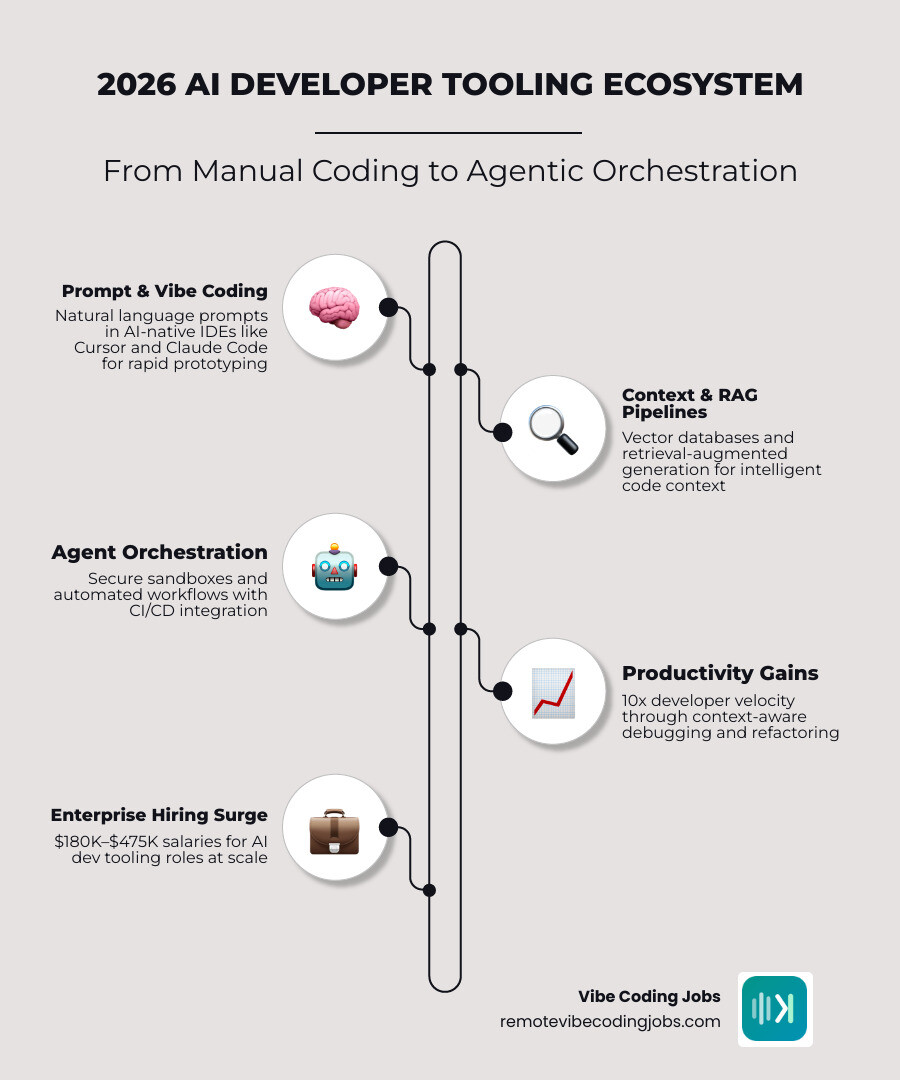
The Most In-Demand AI Dev Tools Jobs in 2026

In 2026, the landscape for ai dev tools jobs has shifted from experimental labs to the core of enterprise infrastructure. We are seeing a massive surge in hiring as companies realize that developer productivity is no longer about faster typing, but about better “orchestration.” Major players like Snowflake and Scale AI are leading the charge, but the demand spans from high-frequency trading firms like Hudson River Trading to agile, remote-first startups.
The current AI Coding Jobs Market Trends show that companies are no longer just looking for “AI Researchers.” They want engineers who can build the platforms that other engineers use. This has created a new category of “Developer Experience” (DevEx) roles that are specifically LLM-focused.
Staff Roles at Enterprise Leaders
At the enterprise level, the goal is the “agentic enterprise.” This means building infrastructure where AI agents can autonomously handle tasks like code remediation, observability, and CI pipeline management. For instance, the Staff Software Engineer – AI Developer Tooling at Snowflake position focuses on creating platforms that support 10x increases in productivity.
These roles aren’t just about writing code; they’re about strategy. If you’re looking at a Software Engineer, AI Developer Tooling at Scale AI, you’ll be tasked with defining the next generation of frameworks that allow human developers to collaborate with AI agents at a billion-scale level. The focus here is on scalability, security, and high-trust collaboration between humans and models.
Entry-Level AI Dev Tools Jobs and Remote Opportunities
While senior roles dominate the headlines, the AI Coding Jobs Entry Level Remote market is surprisingly accessible. Many companies are hiring “AI Trainers” or “Junior Agentic Engineers” to help evaluate and fine-tune model outputs.
We are also seeing a rise in flexible contract positions. Platforms like Crossover and Indeed show remote AI developer roles with hourly rates ranging from $65 to $250. These positions often involve machine learning engineering or training AI models for specific industries like gaming or finance. It’s a fantastic way to get your foot in the door if you’re transitioning from traditional software engineering.
Essential Skills for AI Developer Tooling Roles
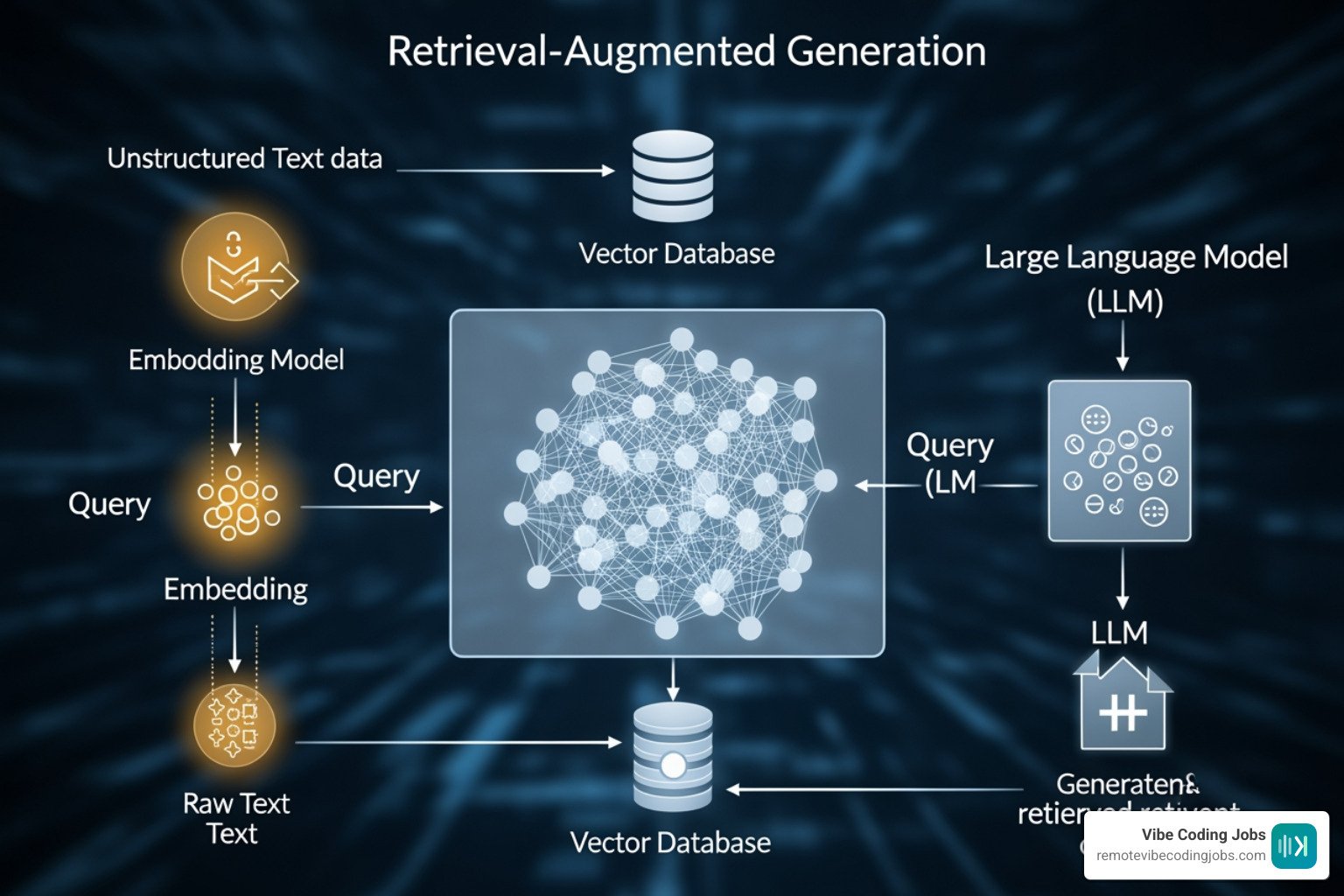
To land one of these ai dev tools jobs, you need a blend of traditional engineering rigor and modern AI-native fluency. Gone are the days when knowing just a bit of Python was enough. Companies now expect you to understand how to move data through LLMs efficiently and securely.
Technical Stack: Beyond Basic Python
While Python remains the king of AI, many infrastructure-heavy roles (like those at Snowflake) require fluency in Go or Java to handle high-performance build systems. However, the real “special sauce” in 2026 is your ability to work with:
- RAG Pipelines: Understanding embeddings, chunking strategies, and vector databases like Pinecone or Qdrant.
- Agent Orchestration: Using frameworks like LangChain or LlamaIndex to build multi-step autonomous workflows.
- Observability & CI/CD: Integrating AI-driven bug detection into pipelines. The Mashgin – AI Developer Experience role, for example, emphasizes building 0-to-1 systems for automated code refactoring and context-aware documentation.
For a deeper dive into the specific instruments of the trade, check out our guide on AI Coding Tools for Vibe Coding.
The Rise of Vibe Coding and Prompt Engineering
We’ve entered the era of “vibe coding”—a term that describes development where natural language is the primary interface. In this world, your ability to describe the “vibe” or the architectural intent of a feature is just as important as your ability to debug the output.
Hiring managers are increasingly looking for “portfolio-first” candidates. The AI Coding Jobs Entry Level Future is being built by people who can demonstrate rapid prototyping skills. Can you use Cursor and Claude Code to build a functional MVP in a weekend? If so, you’re already ahead of many traditional candidates who are still resistant to AI-assisted workflows.
Salary Benchmarks for AI Dev Tools Jobs
The compensation packages for ai dev tools jobs in 2026 are, frankly, staggering. Because these roles are seen as force multipliers—engineers who make everyone else 10x more productive—companies are willing to pay a massive premium.
High-Paying AI Dev Tools Jobs: Salary and Compensation
If you are based in (or willing to work for companies in) major tech hubs like San Francisco, New York, or Seattle, the numbers are eye-watering.
| Experience Level | Base Salary Range | Total Comp (Target) |
|---|---|---|
| Junior / Entry | $110K – $160K | $140K – $180K |
| Mid-Level | $175K – $250K | $220K – $300K |
| Senior / Staff | $250K – $475K | $350K – $600K+ |
A prime example is the role at Thinking Machines Lab, where a Software Engineer for Developer Productivity can earn between $350,000 and $475,000 USD. Even at more “standard” AI companies like Scale AI, the base salary for a dev tools role sits comfortably between $180,000 and $225,000.
Freelance and Contract Rates in 2026
Not everyone wants a 9-to-5. The freelance market for AI agents is booming. We’re seeing a lot of demand for a Senior AI Agent Developer Remote May 2026 who can build custom RAG pipelines or web-scraping agents on a project basis.
Hourly rates for these specialists typically range from $65 to $250 per hour. The higher end of that spectrum is reserved for engineers who can not only write the agentic logic but also handle the DevOps and deployment (Docker, Kubernetes, Terraform) required to make those agents production-ready.
How AI-Native Tools are Redefining Software Engineering
The day-to-day work in ai dev tools jobs looks very different from traditional software engineering. We’ve moved away from “manual labor” coding toward “editorial” coding. You spend less time worrying about syntax and more time worrying about system design, context, and “golden paths.”
The Cursor and Claude Code Revolution
Tools like Cursor and Claude Code have become the standard environment. They provide context-aware debugging and automated refactoring that feels like having a senior partner sitting next to you 24/7.
As we highlight in AI Coding Jobs Remote Options Growth, these tools have made remote work even more viable. When the AI can provide instant context on a massive, unfamiliar codebase, the “onboarding tax” of remote work nearly disappears. This opens up AI Coding Jobs Entry Level Remote Opportunities for people who might not live in Palo Alto but have the “vibe” and the technical chops to contribute.
From Manual Coding to Agent Orchestration
The next frontier is agent sandboxes. Companies are building secure, reproducible environments where AI agents can actually run the code they write, test it, and fix it before a human ever sees a Pull Request.
This shift toward automated remediation is one of the biggest AI Coding Jobs Market Entry Level Remote Benefits. It allows smaller teams to maintain massive systems, as the “to-do” list for a human developer shifts from “fix these 50 bugs” to “review these 50 AI-generated fixes.”
Frequently Asked Questions about AI Dev Tools Jobs
Do I need a CS degree for AI dev tools jobs?
Surprisingly, the answer is increasingly “no,” especially for vibe coding and agent-building roles. While enterprise giants like Snowflake still list a B.S. in Computer Science as a requirement, many startups prioritize your portfolio. If you can show a series of complex, AI-assisted projects you’ve shipped, that often carries more weight than a degree from 2015. You can stay updated on this shift via AI Coding Jobs Entry Level Market Trends Remote Certifications.
What is the difference between AI dev tools and traditional SWE roles?
Traditional SWE roles focus on building features for end-users. AI dev tools jobs focus on building the engine that builds the features. You are essentially a “meta-developer.” Your customers are other engineers, and your goal is to eliminate their bottlenecks using LLMs.
Which cities have the most AI developer tooling positions?
San Francisco and Palo Alto remain the “gravity centers” for high-paying roles (like those at Mashgin or Thinking Machines Lab). However, the “vibe coding” movement is inherently global. We are seeing major remote-first hubs emerging where companies embrace async culture and AI-native workflows.
Conclusion
The robots aren’t taking your job—but a developer who knows how to use AI dev tools might. The demand for ai dev tools jobs is a clear signal that the industry is moving toward a future where “vibe coding” and agentic orchestration are the standard, not the exception.
At RemoteVibeCodingJobs, we specialize in finding these exact roles. We filter for companies that actually “get” it—the ones that are async-first, offer AI Coding Jobs Entry Level Growth Remote Perks, and encourage the use of tools like Cursor and Claude.
Ready to make the jump? Don’t wait for the next wave of automation to pass you by. Apply for the latest AI dev tools jobs today and secure your spot in the AI-native future.